







Configuration options
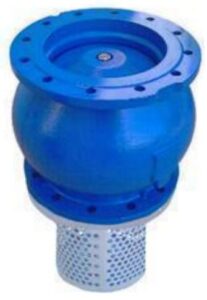 |
Ductile Axial Flanged Check Valve w/ Stainless Steel Strainer |
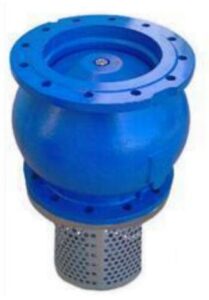 |
Ductile Axial Check Valve with Flanges w/ Galvanized Steel Strainer |
Possibility of changing Carbon Steel Sieve.
|
Ductile Axial Flanged Check Valve w/ Stainless Steel Strainer |
|
Ductile Axial Check Valve with Flanges w/ Galvanized Steel Strainer |
Possibility of changing Carbon Steel Sieve.
– Flange dimension according to UNE-EN 1092-2 PN25.
– Holes according to UNE-EN 1092-2 PN25.
Characteristics:
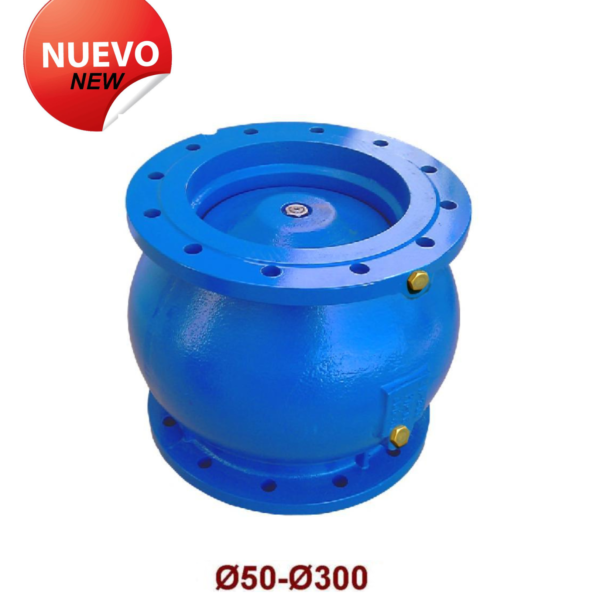
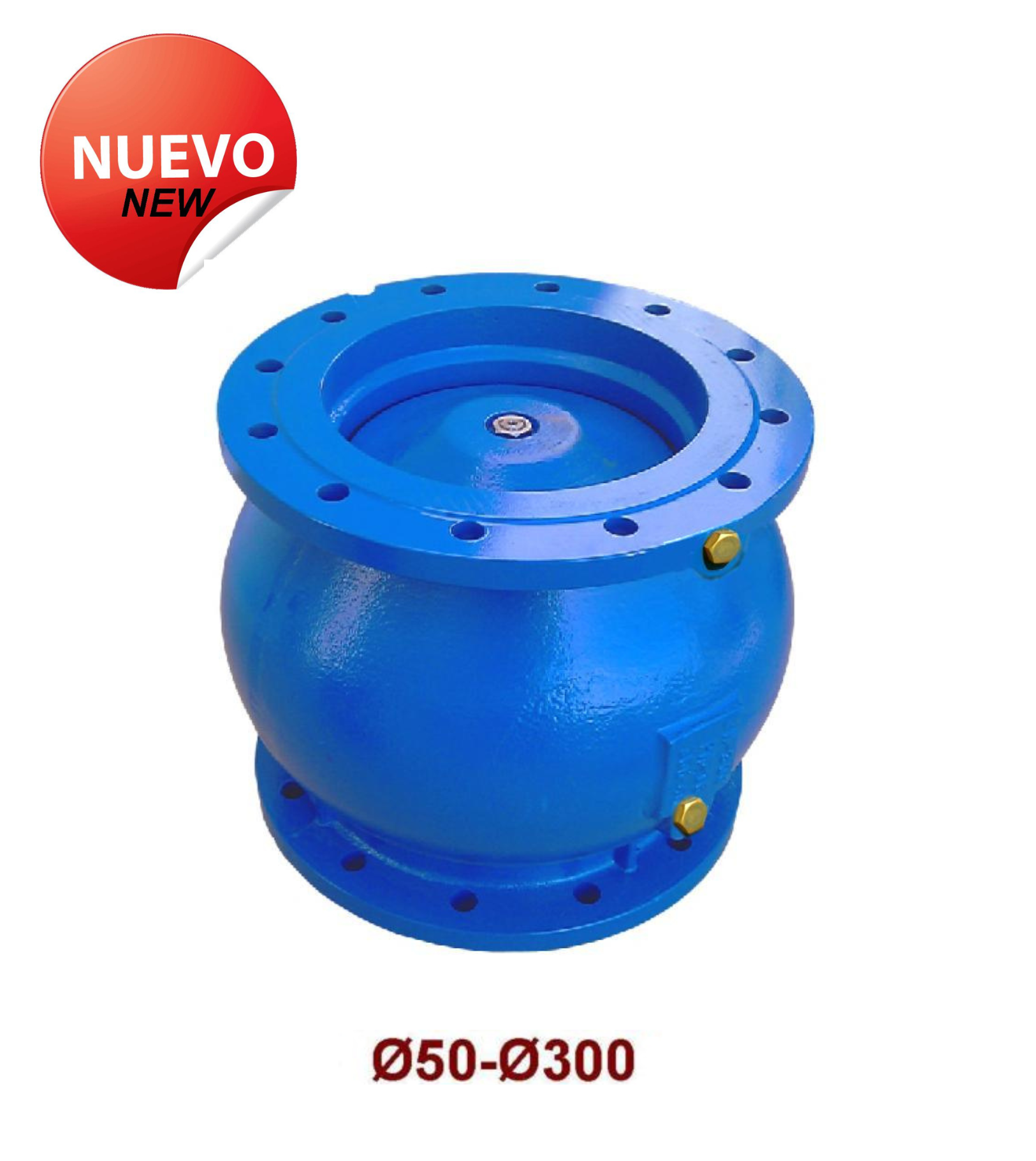
–Axial disc check valve for protection and non-return of clean water.– The valve is installed both horizontal and vertical pipes.
– Silent operations.
– Easy maintenance.
– Temperature NBR: De -10 a +80 ºC.
– Leak rate according to EN 12266 (ISO 5208).
| Temperatura máxima | 80 ºC |
|---|
Aplicaciones
Las válvulas de pie se utilizan habitualmente en estanques, piscinas, pozos y casi cualquier lugar donde haya una bomba.
La superficie o apertura de la válvula de pie es mayor que la de la tubería, con lo que se minimiza la pérdida de carga (energía disipada debido a la fricción a lo largo de la tubería).
Or also called silent spring check valve. Our axial check valve is spring loaded and is a type of valve used to prevent reverse flow of fluids in different industrial applications and also to eliminate water hammer and its associated problems. This valve works based on the pressure difference, that is, it opens when the suction pressure is high and closes when the suction pressure is lower than the outlet pressure.
Water hammer causes mechanical stresses in the piping system that can interfere with the structural integrity of pipes and plumbing fixtures. That is why our valve is designed so that it can close slowly so that water hammer, vibrations are eliminated and reverse flow of fluid is also prevented. The spring in this valve serves to slowly return the disc to its seating position after the fluid pressure begins to reduce.
This valve is intended to ensure that the fluid flows in only one direction and cannot flow backwards. This valve can also act as a suction valve (foot valve) to be placed at the bottom of a pipe line or in a pump, if we attach a steel strainer to one of its flanges.